Imagine
Start with a personal context, need or moment that matters.
Whalets
SAMRA 2026 Gold AwardWhalets are mobile-first AI co-creation surveys that let people create, visualise, edit and refine ideas—not simply answer questions or react to finished concepts.
The creative journey becomes evidence: every prompt, reaction, edit, rejection and final choice can help a team understand what matters and why.
Talk to us about Whalets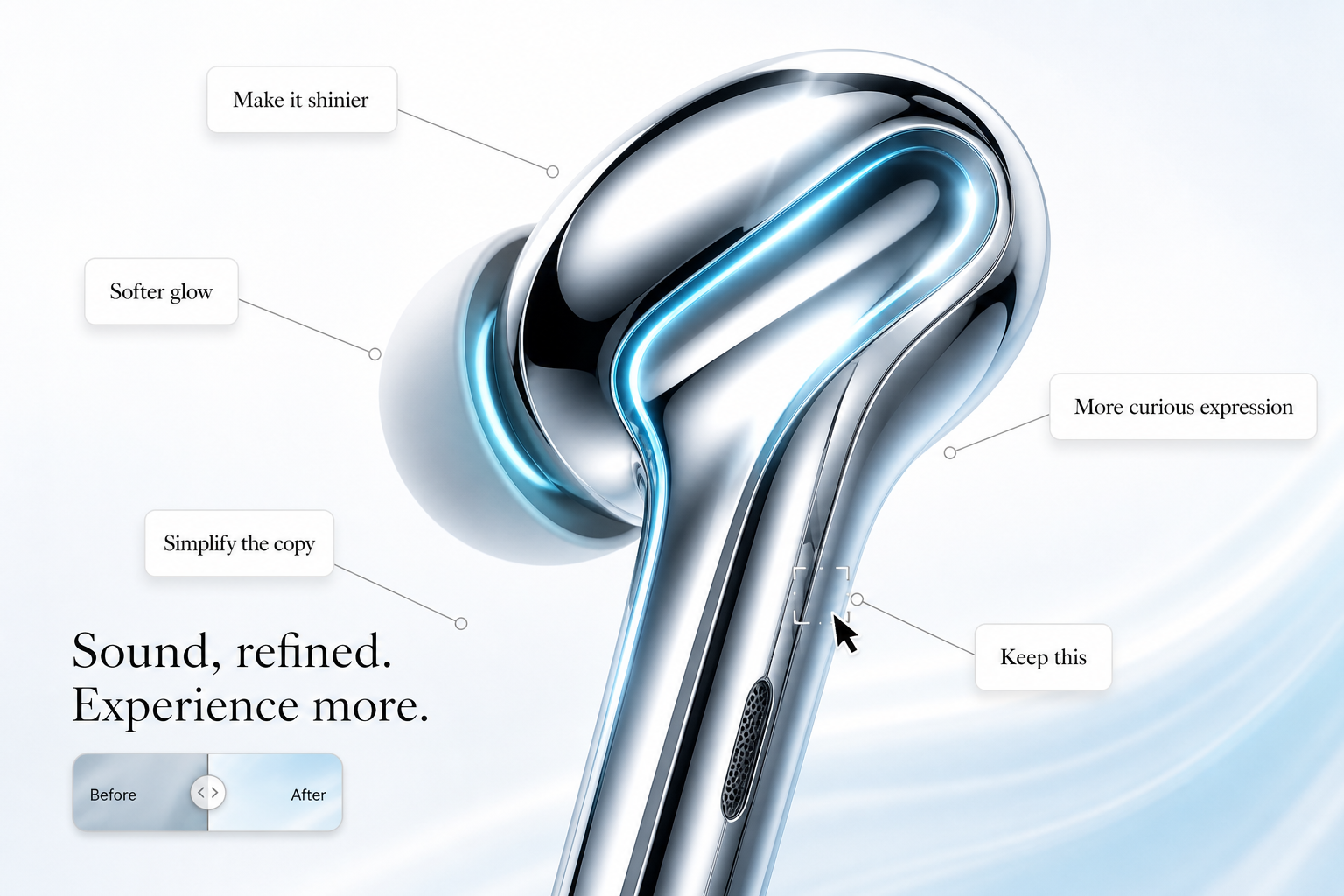
A different kind of survey
The concept emerges through the participant’s imagination, reaction and refinement.
AI’s role is to bring an idea to life through visualisation.
Participants are not expected to be designers. The experience gives ordinary people a more expressive way to communicate intention, emotion and preference.
Participants can help create:
Brand names
Logos and visual identities
Colours and symbols
Campaign messages
Characters and personas
Campaign stories
Products and rewards
Store and digital experiences
Prompt scaffolding
A blank prompt can be intimidating. Whalets uses a thoughtful structure that builds towards a richer prompt, while the creative choices remain with the participant.
After the first creation, participants can rate, react to and improve it—giving them greater control over where the idea goes next.
Iteration by design
Start with a personal context, need or moment that matters.
Use guided questions to put an idea, feeling or preference into words.
Bring that thought to life as a tangible first expression.
Notice what feels right, what does not, and what is missing.
Add detail, adjust the direction and make the idea more personal.
Read the choices, changes and reasoning as evidence.
Creative confidence differs from person to person.
Some people appreciate an output but struggle to suggest changes; others make small adjustments; others actively challenge and develop the idea. The research design needs to invite and support each of these modes.
What becomes data
Traditional concept testing often treats the final response as the data. Co-creation captures the path to that response, revealing both intention and priority.
Original intention, prompt and first expression
Emotional reactions and what participants rejected
What they chose to add, remove, amplify or protect
Improvement instructions and regenerated expressions
Reasoning throughout the creative journey
Generated visuals are exploratory evidence—not finished creative executions.
People build, adapt and improve ideas themselves, revealing what they imagine, want, reject and refine.
Prompts, edits, rejections and final choices capture needs, language, emotions, visual cues and preferences.
Guided starting points remove the blank-canvas problem while leaving room for imagination and originality.
Teams can explore and refine ideas earlier, moving more quickly from participant input to innovation direction.